
How to Create Powerful Brand Awareness for Your Business

How to Create the Best Brand Awareness for Your Business

Your products, your services, and your business all revolve around your brand. It is the key defining factor of a company and one that can either make or break a business. It is imperative that you know how to create the best brand awareness for your business – and here’s how you can do it.

Promote Your Brand in the Best Light

Does a struggling salesman start turning up to work on a bicycle? No, he turns up in a newer car; brand awareness is all about perception. Whether it’s using digital film for a televisual marketing campaign or B1 format printing in a print media campaign, it is vital that you always use the best tools at your disposal when creating brand awareness.

Finding Your Brand’s Voice

Customer loyalty is vitally important to almost all businesses. It is a phenomenon that allows a company access to people who will act as free marketing brand ambassadors. Additionally, loyal customers will provide you with honest, quality feedback. It is a factor that also helps to insulate a business from price competition. However, customer loyalty rarely happens by accident; it is something that a brand has to work at.

One of the reasons that customers remain loyal to a brand is because they feel like they relate to it. This may be through shared moral values or a shared sense of humour; whatever it is, the importance of it is that it keeps customers coming back.

In order to ensure that you are able to achieve a high level of loyalty among your consumer base, you must be consistent with the values and tone of your brand. If the Sun newspaper suddenly changed its stance from a reactionary redtop to a left-wing broadsheet, it is very unlikely that brand loyalty alone would allow the publication to keep its readership. In much the same way, if you fail to be consistent with the tone and value of your business, you will struggle to reap the rewards associated with customer loyalty.

Although you want your brand to have its own clear voice, you should be careful not to be too extreme with your values; otherwise, you could reduce your potential consumer base, which would impact negatively on your business.

Build a Multi-Platform Brand

Just because your company produces toilet roll, this doesn’t mean that you need to limit your brand to this one area of business. Try thinking outside the box and consider the other areas in which you could expand your business.

Innocent, a company that is perhaps best known for its range of pulped fruit drinks, also produces a range of recipe books and writes a popular blog. These are both ways that the company creates brand awareness through diversification.

A toilet roll company might do the same by authoring a series of short stories or producing a range of toilet cleaning supplies. The idea is to increase awareness about your brand in as many relevant ways as possible.

How to Integrate WordPress and Facebook for Powerful Marketing Results

The Power of Facebook in Modern Marketing

Facebook is kind of a big deal. Marketers everywhere saw the power in the social platform years ago, when it was nothing more than a glorified RSS tool that allowed you to build influence and affinity as well as keep subscribers in the loop. Now, things have changed. Facebook has become the social network as opposed to one of many. It’s the only tool of its kind that becomes a completely integrated marketing channel all on its own.

From retargeting and paid ads to lead generation and influence building, Facebook has become a force to be reckoned with. Smart marketers are using it to tie all their online properties together to maximize the platform’s benefits.

How to Get Started with Facebook Marketing

WordPress and Facebook Integration

WordPress is a great marketing tool on its own, but combining its power with Facebook to build your audience is an effective way to turn readers into customers. This starts the process of moving your audience into the early stages of your sales funnel.

Plugins like Disqus allow easy commenting and liking by logged-in Facebook users, eliminating the need for form submissions. Another example is Yoast, which integrates graph search tags and optimizes post images for Facebook shares. These tools help bridge the gap between WordPress and Facebook, enhancing user engagement.

A blog isolated on its own isn’t as effective anymore. Seamlessly moving subscribers between social networks ensures they remain truly engaged.

Lead Generation on Facebook

While email open rates continue to decline, Facebook offers unprecedented access to your target audience. Many marketers still rely on landing pages to get users to download reports or white papers by opting into an email list. However, an increasing number of marketers are opting instead for a simple Facebook “Like.”

This process is less invasive and allows you to send 3-4+ optimized messages daily, which would be considered spam via email. Additionally, Facebook “shares” extend your influence by appearing in more newsfeeds, unlike emails that are quickly discarded.

Fans acquired through Facebook can be nurtured into additional funnels or client lists after you build enough influence. With WordPress and additional plugins, you can even funnel visitors into restricted website areas that add more value and push customers deeper through your sales funnel.

Promoted Posts to Boost Visibility

No matter how good your content is, it won’t get you anywhere if no one sees it. Facebook offers a cost-effective solution with its promoted posts feature.

After writing and sharing a blog post on your Facebook page, clicking the “promote post” button and investing as little as $5 can bring thousands of new eyes to your content. While not all views result in clicks, many will. This boosts both your website pageviews and Facebook page likes at a fraction of the cost of traditional online advertising. It’s common to see clicks costing less than a penny, helping you reach large new audiences previously out of reach.

Retargeting for Increased Conversions

Retargeting is one of the most powerful yet underutilized Facebook tools. It allows you to show ads to visitors who didn’t convert initially, increasing your chances of turning them into customers later.

For example, after sending blog readers to a landing page for a free download, you can use Facebook ads to retarget those who didn’t convert with the same offer for weeks or even months.

Research shows that many who don’t purchase on the first visit will convert later if given the opportunity. Using paid retargeting ads, you can potentially increase a 15% opt-in rate to 30-40% or more at very low cost. This is a powerful marketing tool that you should definitely be taking advantage of.

Conclusion: Why WordPress and Facebook Make a Powerful Duo

WordPress and Facebook make a powerful duo for marketers who know how to use them. While either platform might have been enough in the past, the future lies in an integrated marketing approach. This approach blurs the lines between content marketing, social media, SEO, and more.

If you aren’t integrating your marketing efforts, chances are your competitors are. Don’t get left behind — start connecting your WordPress and Facebook strategies today to maximize your online presence and business growth.

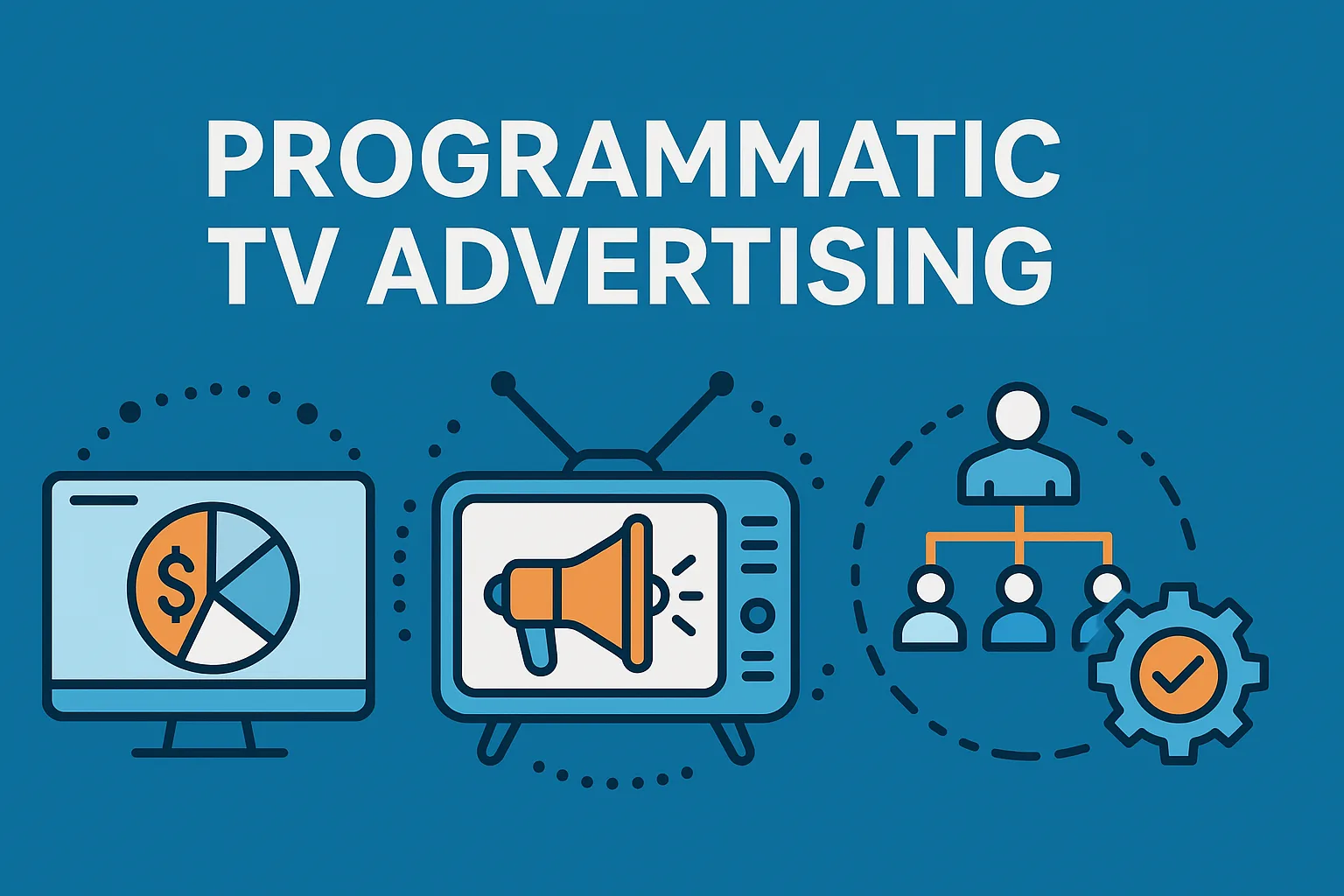
Programmatic TV Advertising: The Future of Smart Media Buying

Programmatic has grown to be a popular method of purchasing digital impressions and is set to become a revolutionary model in TV advertising. Via bespoke software, the system automates the buying of media inventory within a specific target demographic.

Where traditionally the marketing of a sports product might be aimed at the viewers of a sporting show, programmatic enables broadcast to an audience with, say, a particular income bracket, whether they are tuned into a sports programme or not. This methodology will see a significant boost in the value of TV inventory.

Is Real-Time Bidding a Method of Purchase?

Once the suitability of the inventory has been determined by the software, it can be purchased. While RTB (real-time bidding) is a common way of buying online media, because there is a limited supply in the TV marketplace, it will not be a primary purchasing method for programmatic TV advertising—although it is likely to still be used in some cases.

Benefits of Programmatic TV Advertising:

Programmatic TV advertising enables the instantaneous and data-driven purchase of inventory. As such, broadcasters and distributors are able to fully monetise their inventories, while advertisers benefit from even more specific targeting.

Traditionally, the buying and selling of TV inventory has incurred numerous manual procedures including requests for proposals, insertion orders, and ad trafficking. Programmatic cuts out many of these labour-intensive tasks, making the whole process more efficient.

It is not just the networks and marketers who stand to gain from adopting the approach. Programmatic TV advertising is also beneficial to audiences, as viewers are not subjected to irrelevant or repetitive advertisements.

Will It Really Catch On?

There is a great deal of speculation on how successful programmatic TV advertising will become. In the United States, the market is currently worth around seventy billion dollars per year, and its value is expected to rise to approximately eighty-four billion dollars by 2018.

Long-term players in the TV industry have expressed scepticism, and many voice the mindset of: “if it’s not broken, why fix it?” There is a wariness of commoditising or devaluing prime time commercial space.

However, as RTB is unlikely to be a common buying method for programmatic TV advertising, this shouldn’t be a major issue. In these early stages, it is likely that large networks will lack the motivation to adopt programmatic, whereas the lower-tier channels—who possess an abundance of inventory—will probably embrace the approach a lot quicker.

In 2015, it is anticipated that three to five percent of TV inventory will be sold programmatically. At present, the most efficient software can automate insertion orders and make use of basic demographic information.

The technology is unable to provide certainty that the target audience is definitely watching, or whether it’s a target’s friend or relative. Although current data in the marketplace is not yet as sophisticated as it is across digital media, trusted information will become more accessible, which is why programmatic has a lot of potential. The progression of programmatic TV advertising has been likened to the emergence of computerisation in the 1980s.

The Future of TV Advertising:

It’s clear that programmatic TV advertising is going to take a while to catch on, but many have already recognised the benefits that it provides.

Software companies have begun to offer systems that allow media partners to sell TV inventory using the same tools as for online advertisements. Developments like this pave the way for a uniform approach, and a method of cross-screen execution that means consumers can be targeted whether they are watching TV or using a mobile device.

The advancements that go hand in hand with programmatic have the potential to revolutionise the industry, completely changing TV advertising as we know it.